
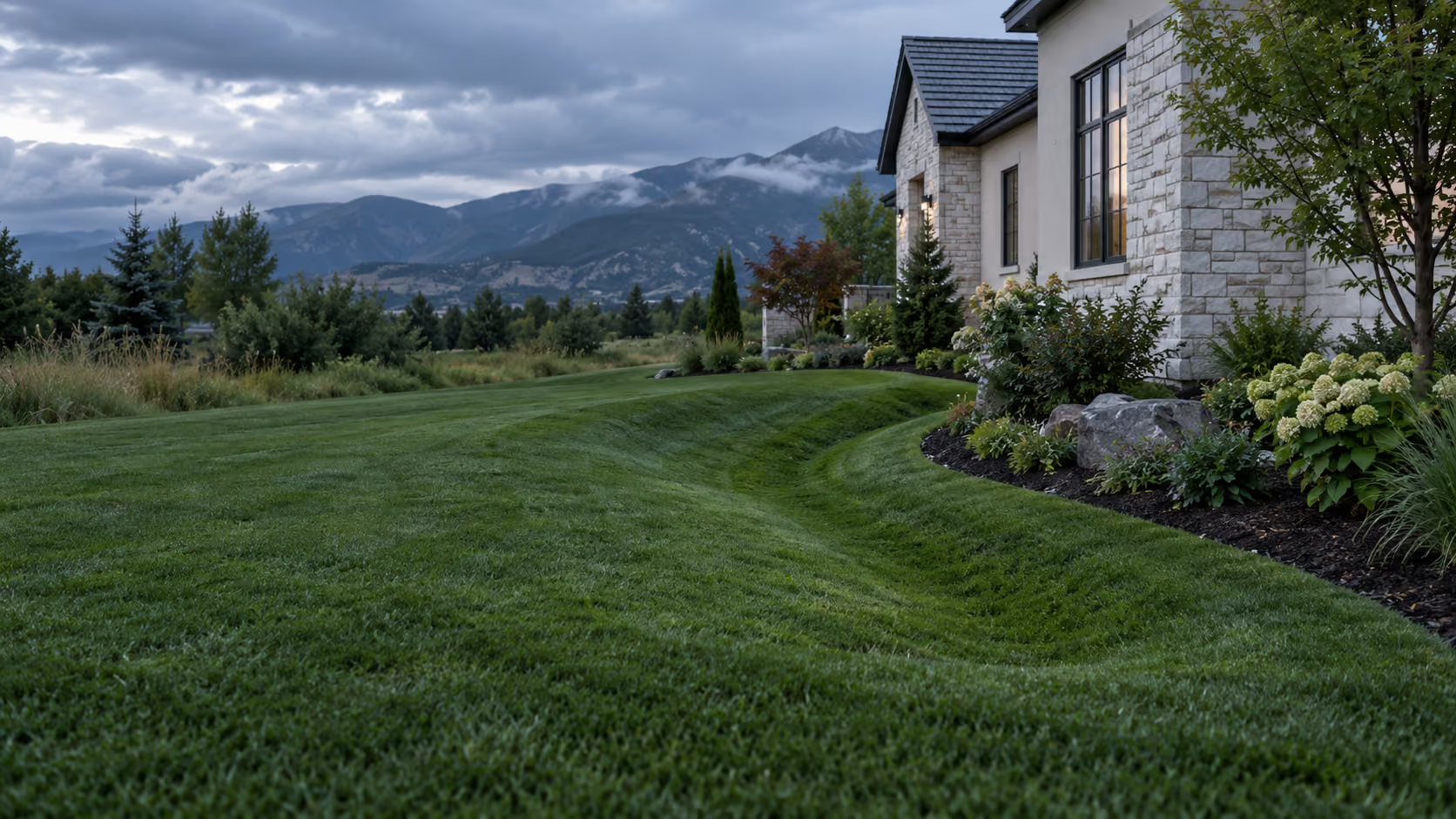
French drain installation in Hooper
French drains in Hooper, Utah. Review the receiving plan before fixing the trench route. Compare options and request a property-specific quote.
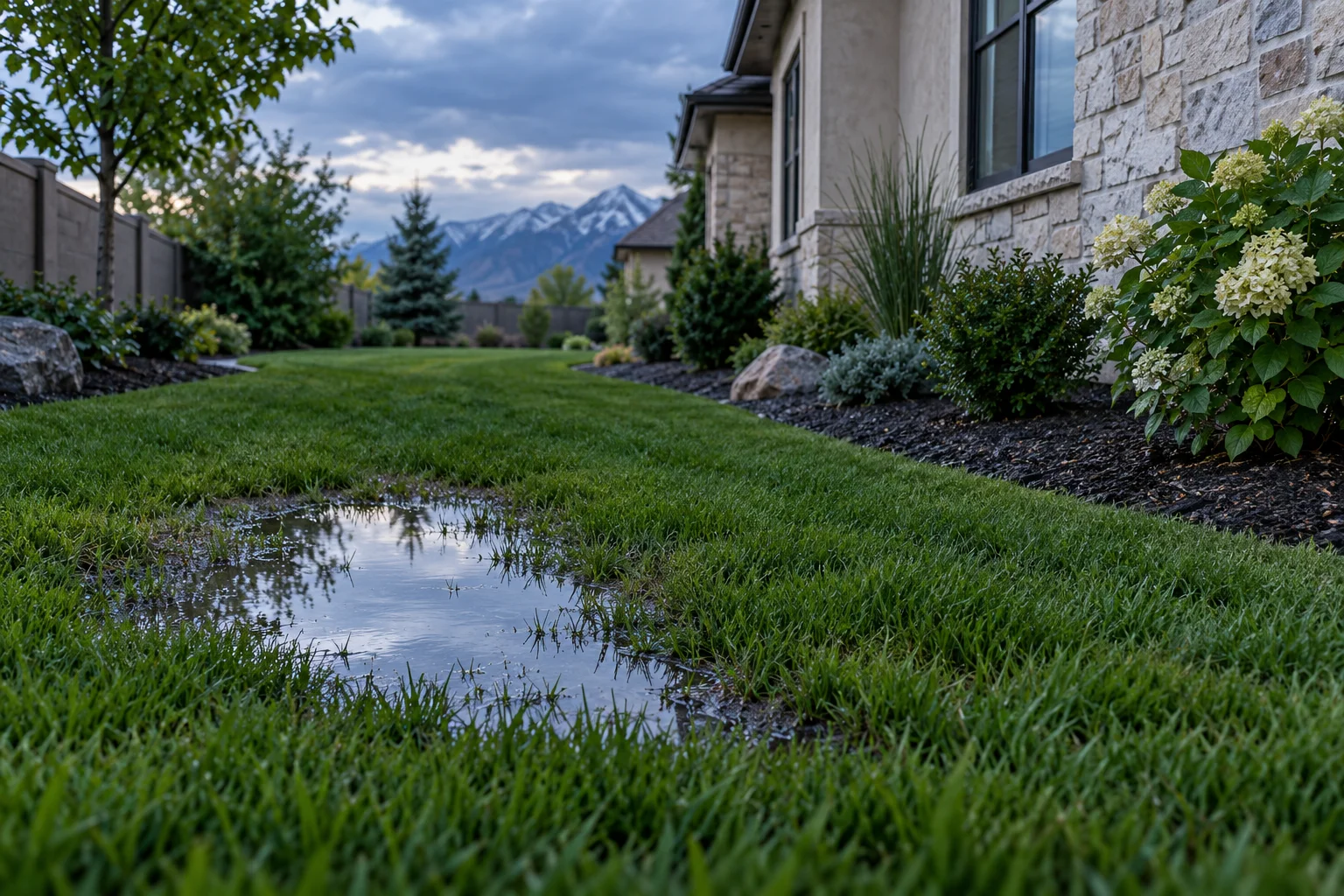
Drainage planning at your Hooper property.
Describe where water collects, when it appears and any existing drain or outlet. If you are comparing options, start with the collection objective and the receiving route rather than choosing a trench type first.
Review the receiving plan before fixing the trench route.
Begin with the collection area and proposed discharge location, then identify which part of the route is on private land and which depends on another owner. A sketch can make the estimate and any required stormwater discussion more specific. If infiltration is proposed instead of conveyance, ask what site evaluation supports it. Do not let a pipe layout imply that receiving capacity or connection permission has already been established.
French drain installation and yard drainage options in Hooper.
Match the work to the water path before deciding on a system. A French drain installation is intended for subsurface collection. Yard drainage improvements may instead involve surface grading, collection inlets or a better route for roof runoff. For an existing system, compare drain repair and maintenance before assuming the whole installation must be replaced.
Ask for the collection area, pipe or trench route, receiving point and future maintenance access to be described together. Material choices, excavation access and restoration affect the scope. A pipe length alone is not enough to compare solutions or prices.
Clarify the outlet through the stormwater plan.
Hooper publishes its stormwater management plan and a contact for questions. Before laying out a private drain that approaches a public feature, identify the route, receiving location and ownership. Ask which current requirements apply rather than relying on an old standard or a nearby installation.
Details that make the assessment more useful.
- Has the receiving route been checked against current city guidance?
- Note downspouts, irrigation, paving and any landscape changes connected with the symptoms.
- Mention the city or ZIP in Project Details if you are not requesting an on-site visit.
- Ask which work involves private property, an easement or a public right-of-way.
Prepare a property-specific drainage request.
Describe the wet area, when it appears and any existing system in your Hooper drainage quote request. Include property details if requesting an assessment. Confirm coverage, availability, scope and pricing before arranging work.
Simplified illustration. Depth, slope, materials and outlet design depend on site conditions.
Every part has a job.
The collection area, filter materials, pipe and outlet should work together with the layout of the site.
Explore related drainage services ↗Common drainage questions.
What should I include in a drainage request for Hooper?
Has the receiving route been checked against current city guidance? Include where the water collects, when it happens and any existing system.
Can I assume a nearby public drain is an approved outlet?
No. Identify the owner and receiving system, then confirm the applicable connection or discharge requirements before work is arranged.
What should a drainage sketch include?
Show where water collects, the proposed route, existing inlets or drains, property boundaries and the intended receiving point. Mark uncertain connections so they remain explicit questions rather than assumed approvals.