
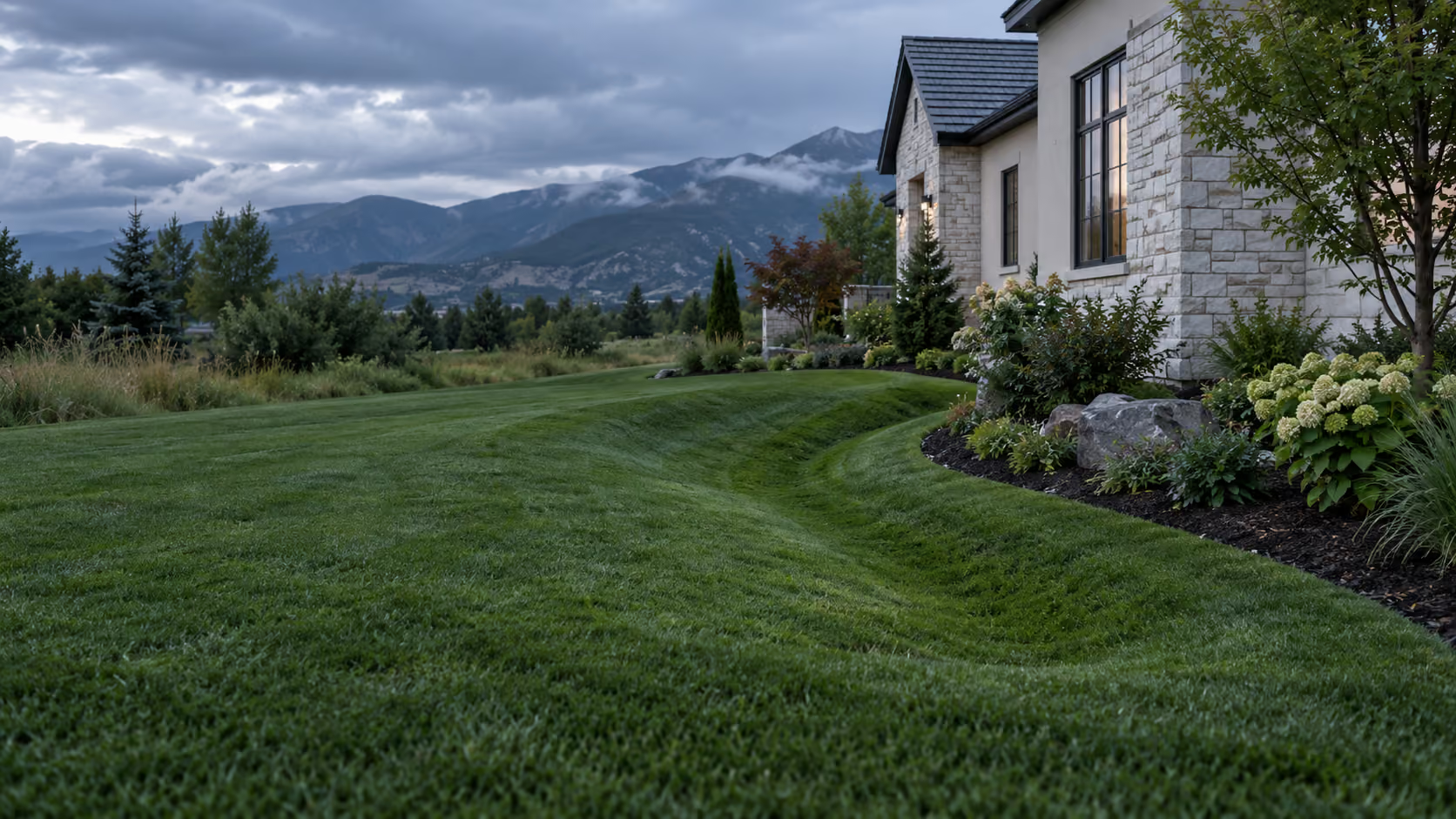
Yard drainage solutions in Utah
Compare grading, downspout routing, surface drains and French drains for standing water, soggy lawns and runoff around your property.
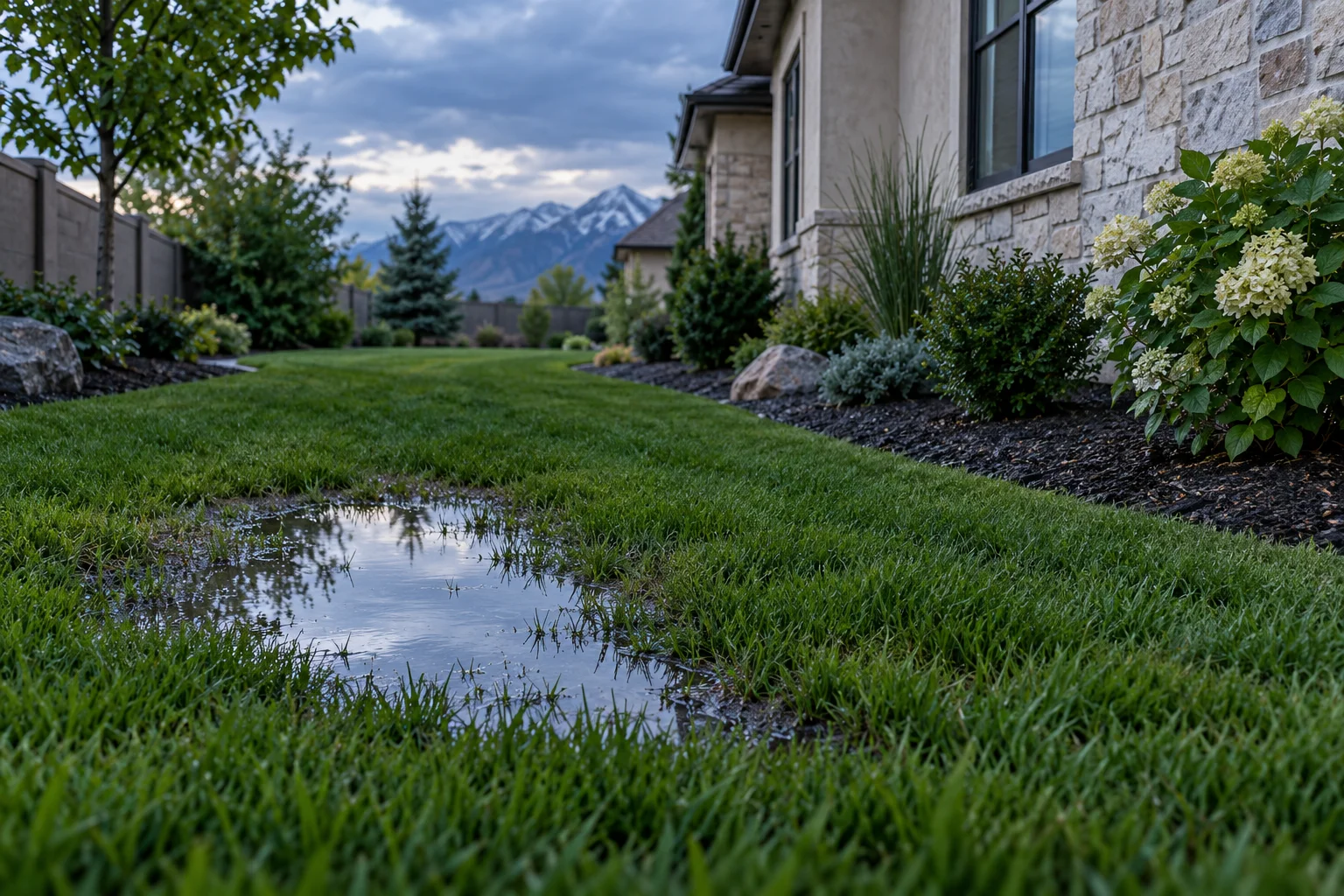
Trace the water before choosing the drain.
A soggy lawn can receive water from roof downspouts, paving, irrigation, an adjoining slope or groundwater. Observe the timing and visible flow paths. A low area after a storm and a lawn that stays wet without rainfall can require different assessments.
Surface grading and downspout routing are often worth examining before a buried system is proposed. University of Minnesota Extension identifies rainwater and surface drainage as important parts of basement moisture prevention.
Compare the drainage approaches.
- Grading and swales guide surface runoff along a planned landscape route.
- Catch basins collect water at a surface inlet; channel drains collect across a linear grate.
- French drains collect water within a subsurface drainage zone.
- Solid downspout piping conveys roof water to a suitable receiving location.
- Dry wells and other infiltration arrangements depend on site acceptance and groundwater-protection requirements.
An outlet must be appropriate for the property.
A drain should not simply move water to a neighboring yard, sidewalk or unapproved public connection. Confirm where the receiving route goes and which authority controls it.
Infiltration is not automatically suitable because an area contains gravel. Groundwater conditions, soil acceptance, setbacks and the volume of runoff affect the decision. EPA explains that certain subsurface stormwater infiltration arrangements can fall under Class V well requirements; classification depends on the design.
Protect existing drainage features.
Do not fill or reroute a swale, ditch, easement or private stormwater facility without understanding its purpose and applicable requirements. A feature that looks like a landscaping inconvenience may carry runoff for more than one property.
The written scope should include access, excavation, utility checks, grading transitions and restoration. Mention lawns, beds, retaining walls and paving that need to remain usable after the project.
Prepare a useful project description.
Tell us where water gathers, what weather or irrigation conditions trigger it and which areas you want to improve. If you decline an on-site estimate, include the city or ZIP in Project Details so the location can still be discussed.
Simplified illustration. Depth, slope, materials and outlet design depend on site conditions.
Every part has a job.
The collection area, filter materials, pipe and outlet should work together with the layout of the site.
Explore related drainage services ↗Common drainage questions.
Is a French drain always the best yard drainage choice?
No. Surface grading, roof-water routing or a surface inlet may better match the water source and collection point.
Can a dry well be installed anywhere?
No. Soil acceptance, groundwater, nearby structures and applicable requirements must be evaluated.
Can a drain discharge at the curb or into a storm drain?
Do not assume permission. Confirm the receiving system, jurisdiction and any connection or discharge requirements first.