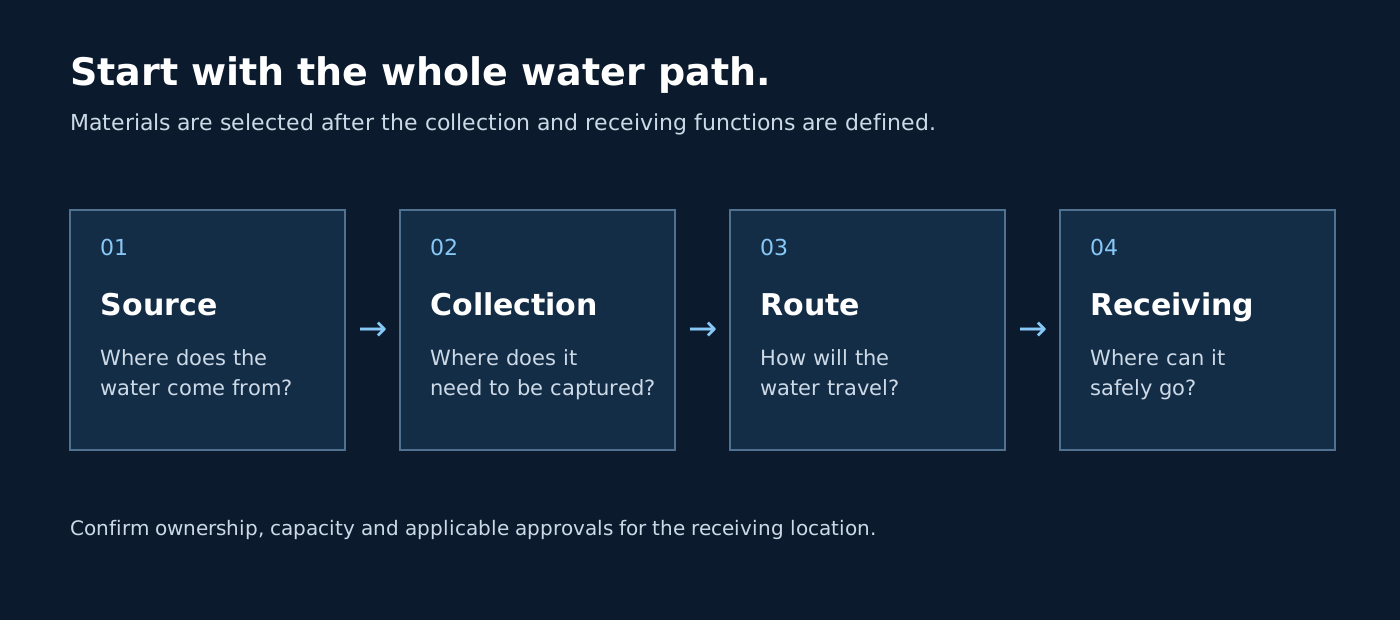

A drain is not complete until the receiving point is defined.
French drains and surface inlets collect water. A conveyance route moves it toward a receiving location. That location must have suitable capacity and permission; moving water out of one low spot is not enough if it creates a new problem.
DOE foundation guidance describes gravity discharge and sump collection as different arrangements. A sump pump moves water from its pit, but the discharge still needs to be directed appropriately.
Gravity discharge and pumping.
A gravity route needs appropriate elevations and a workable outlet. A pumped arrangement needs a collection pit, suitable pump operation and the correct discharge details. Electrical and building requirements belong with qualified professionals.
Do not assume a storm drain, curb or sanitary sewer is an approved receiving point. Ownership and local requirements should be confirmed before a connection is specified.
Infiltration depends on the site.
A dry well or other infiltration arrangement receives water for storage and release into surrounding ground. Soil acceptance, groundwater, nearby structures and the amount of runoff influence whether that approach is suitable.
EPA explains that certain subsurface stormwater infiltration designs meet the Class V well definition and carry groundwater-protection and inventory requirements. Other shallow surface infiltration arrangements may not meet that definition. Ask the appropriate authority about the actual design rather than treating every gravel-filled hole as exempt or permitted.
Check ownership and downstream effects.
- Identify whether the receiving point is on the property, in an easement or in a public right-of-way.
- Ask which city, county, utility or district controls a proposed public connection.
- Explain how overflow or restricted receiving capacity will be handled.
- Confirm the plan will not redirect runoff onto neighboring property.
- Keep the outlet accessible where inspection or maintenance is needed.
Questions for the estimate.
Ask where collected water will leave the system, why that route is suitable and who obtains any required approval. Confirm which parts involve excavation, a pump, surface work or another specialist.
If the outlet has not been assessed, the project scope is incomplete. Resolve that decision before comparing the price of pipe or aggregate.