
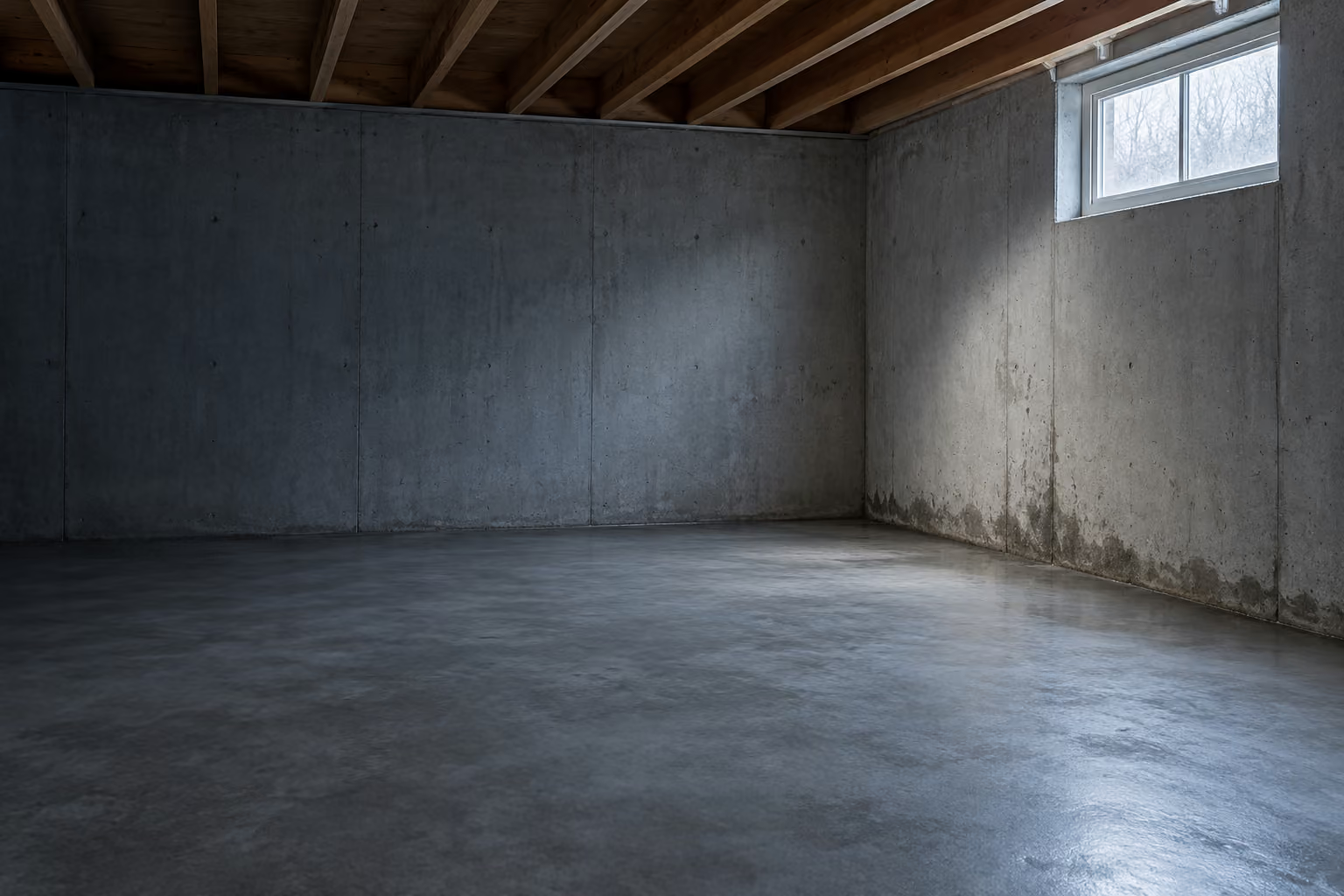
Interior and exterior French drain systems
Compare interior basement drains, exterior foundation drainage and sump discharge. Understand which part of a water problem each approach addresses.
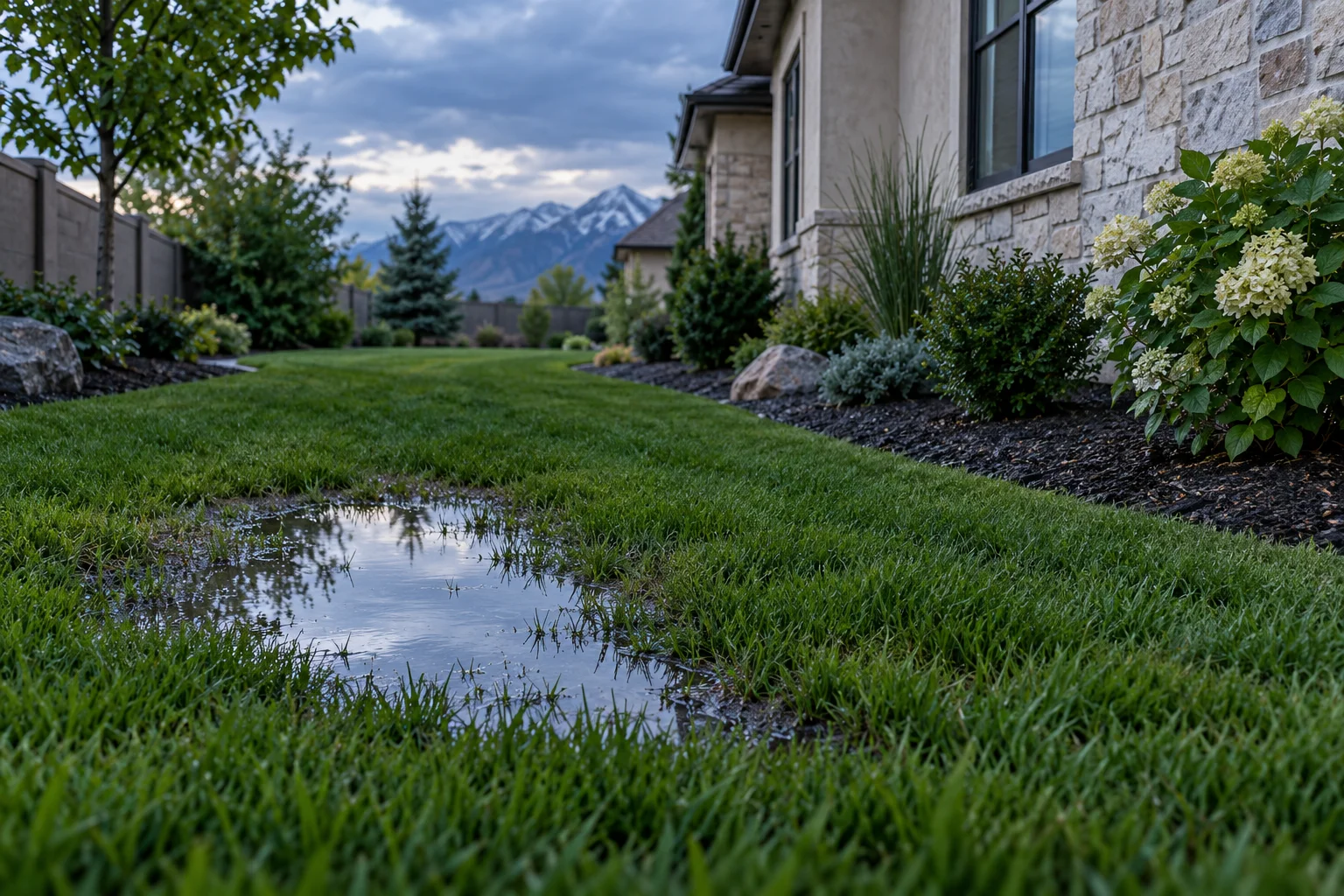
Start by identifying how water reaches the building.
A damp basement can be affected by liquid water, humid-air condensation, plumbing leaks or moisture moving through materials. University of Minnesota Extension recommends a systematic assessment rather than assuming every damp wall needs an interior drain.
Observe whether water follows rainfall, irrigation or plumbing use. Check roof-water routing and grading before choosing a system. Visible cracks, structural movement or water near electrical equipment call for the appropriate qualified professional.
Exterior drainage manages water outside.
Exterior footing drainage is designed around the foundation assembly and a suitable outlet. It may work with grading, downspouts, wall drainage layers and other moisture-control details. An exterior yard drain farther from the building is not automatically a substitute for a footing drain.
Excavation beside a building affects access, landscaping and potentially the foundation. The scope should explain what is being excavated, how the structure is protected and which surfaces will be restored.
Interior drainage collects water inside the foundation environment.
An interior system may collect water near the wall-floor joint or beneath the slab and carry it to a sump or another appropriate outlet. It manages collected water; it does not necessarily stop every path by which moisture enters a wall.
DOE guidance distinguishes the collection drain from the sump discharge. A pump needs a workable receiving location, unobstructed operation and appropriate electrical installation. Requirements depend on the system and applicable codes.
Questions to compare in the estimate.
- Which water source or pathway does the proposed system address?
- Will the work disturb exterior landscaping, an interior floor or both?
- Where will the collected water discharge, and who approves that outlet?
- Does the plan require a sump, wall treatment, grading change or another specialist?
- What access and maintenance provisions will remain after the work?
A dry-looking wall is not a complete diagnosis.
Dehumidification, drainage and building repairs solve different parts of a moisture problem. Ask what the assessment establishes and what remains outside the quoted scope. Do not rely on a generic guarantee that a drain will repair structural damage or resolve every basement moisture issue.
Simplified illustration. Depth, slope, materials and outlet design depend on site conditions.
Every part has a job.
The collection area, filter materials, pipe and outlet should work together with the layout of the site.
Explore related drainage services ↗Common drainage questions.
Is a sump pump the same thing as a French drain?
No. A drain collects and conveys water; a sump pump moves water from a collection pit to an outlet. They can be parts of one system.
Should I choose an interior drain first?
Not without assessing the water source. Roof runoff, grading, condensation and building defects may require different or additional work.
Does an exterior drain eliminate the need for waterproofing?
Not automatically. Water-management and wall-moisture details have different functions. The appropriate combination depends on the building and site.