
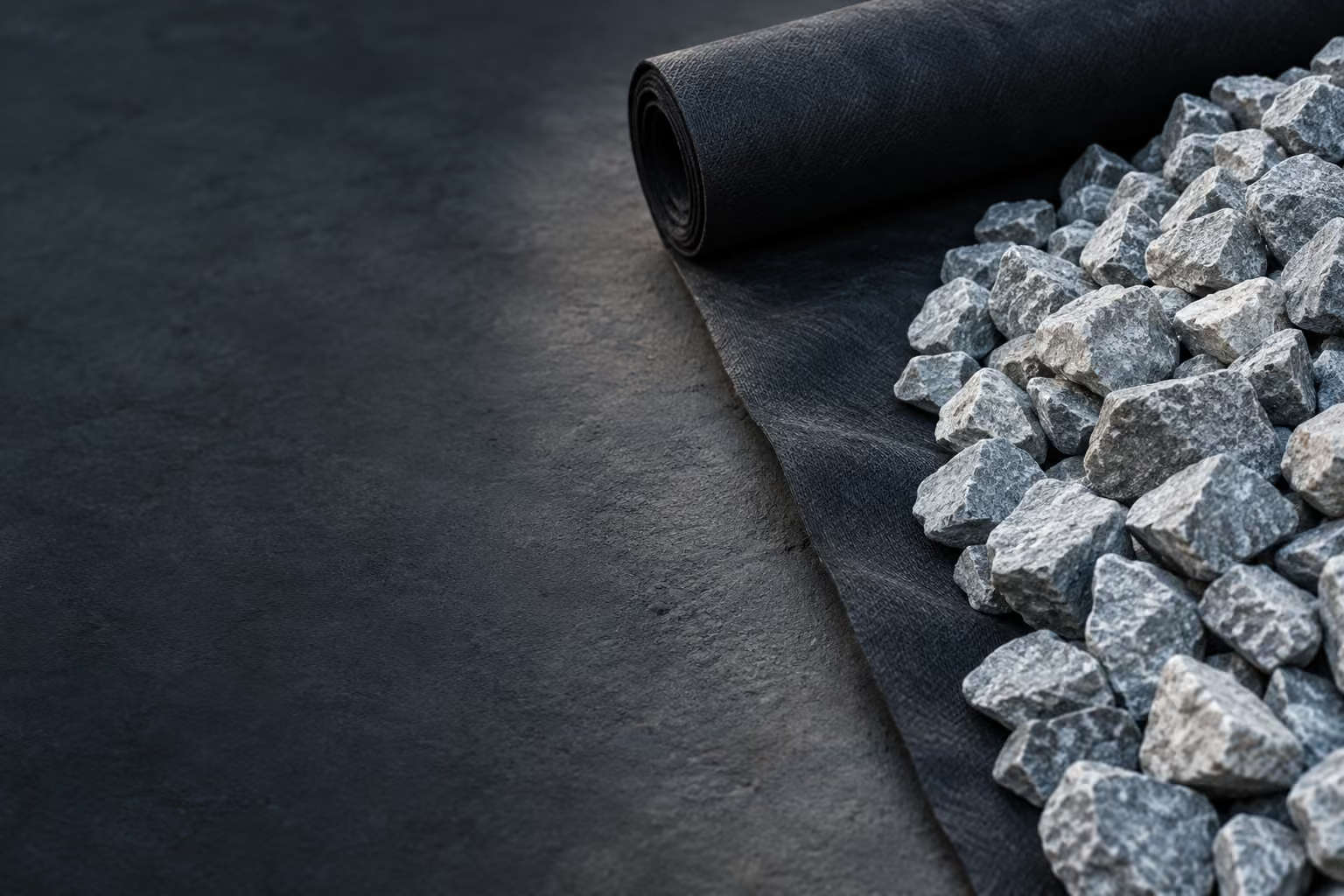
French drain filter fabric selection and replacement
Learn how filtration, surrounding soil and drainage materials affect French drain fabric selection, clogging and repair scope.
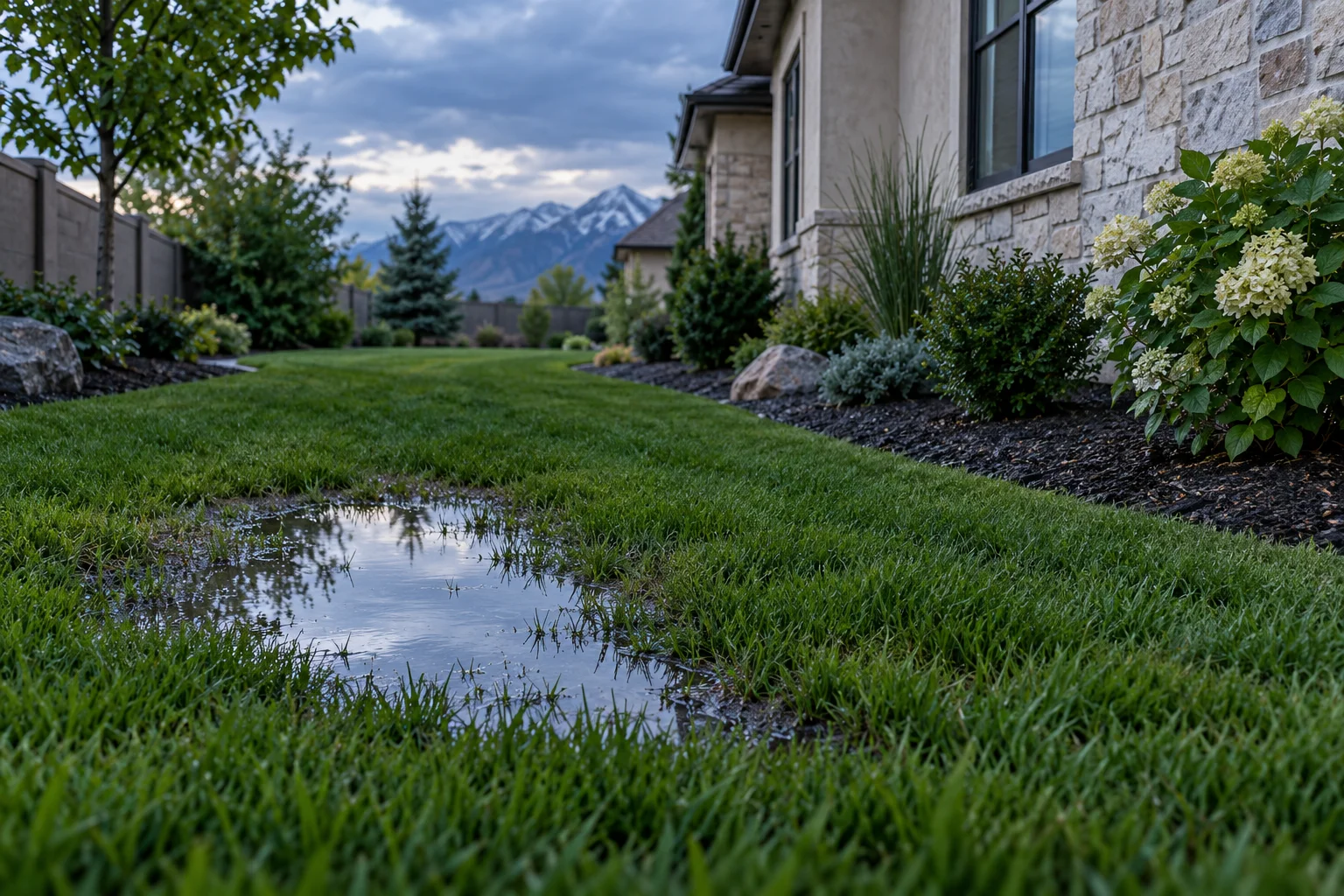
Filter fabric is a soil-compatibility decision.
A drainage geotextile must let water pass while limiting soil migration into the drainage zone. Its suitability depends on the surrounding soil and assembly, not simply whether a roll is labelled landscape fabric.
FHWA drainage guidance explains the need to retain soil without unacceptable clogging. That filtration principle is useful for understanding the decision, but road-design specifications should not be copied into a residential trench.
Look at the fabric, aggregate and pipe together.
DOE footing-drain guidance describes filtration as part of a pipe-and-stone assembly. A filter around a pipe and a fabric surrounding a drainage zone serve related but not necessarily identical roles. The plan should state which assembly is intended.
Ask how soil fines, water passage, seams and connections are handled. The selected material and installation should follow the design and current product documentation.
When an existing system is restricted.
Replacing fabric alone may not restore flow if the aggregate is packed with sediment, the pipe is damaged or the outlet is unsuitable. An assessment should explain how the suspected restriction was identified and which materials need attention.
Fabric replacement can involve substantial excavation and restoration. Confirm whether the repair is localized or whether the drainage route needs to be reconstructed.
Useful estimate questions.
- What filtration material is proposed, and why does it suit the soil and assembly?
- Which parts of the existing drain will be exposed or replaced?
- Will aggregate and pipe condition be evaluated at the same time?
- How will lawn, beds or hard surfaces be restored?
Avoid blanket claims about fabric.
Statements that any landscape fabric works, that fabric always clogs or that one wrapping method fits every system are too broad. Explain the actual materials and site conditions before choosing a product.
Simplified illustration. Depth, slope, materials and outlet design depend on site conditions.
Every part has a job.
The collection area, filter materials, pipe and outlet should work together with the layout of the site.
Explore related drainage services ↗Common drainage questions.
Can ordinary weed-control fabric be used in every French drain?
No blanket recommendation is appropriate. Soil retention, water passage and the intended drainage assembly determine material suitability.
Does fabric replacement guarantee restored flow?
No. Pipe, aggregate and outlet condition may also need repair.
Why do different systems use different filter details?
Their soil conditions, collection methods and product configurations differ. Follow the design and the relevant product documentation.