
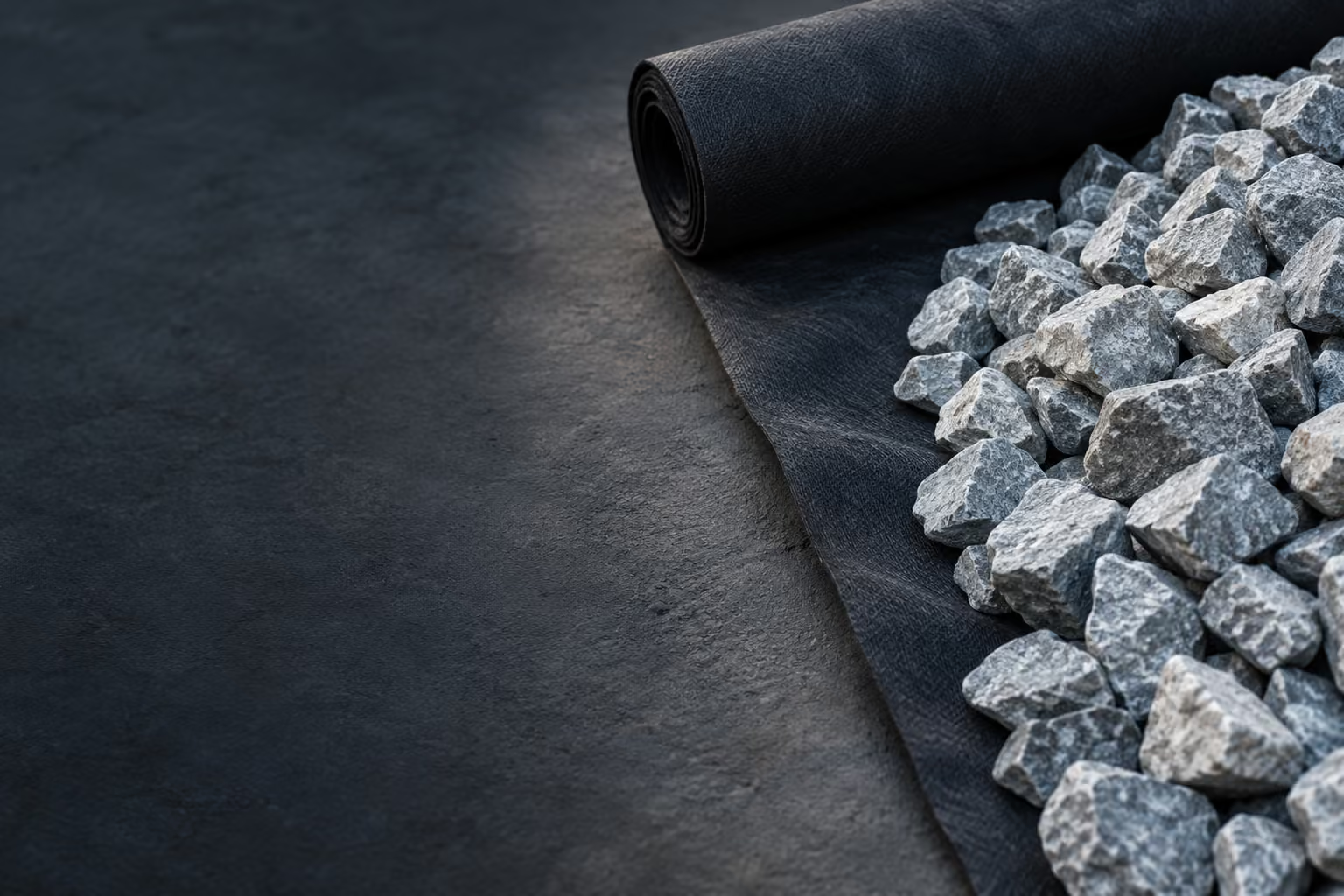
Pipeless French drain options
Understand pipe-free aggregate trenches and manufactured gravel-free drainage bundles. Compare capacity, infiltration, outlets and maintenance.
Pipeless and gravel-free do not mean the same thing.
A pipe-free trench relies on the voids in its drainage material and the surrounding site conditions. A gravel-free manufactured system replaces conventional stone with another drainage medium. The component list determines whether a particular assembly includes a pipe; the marketing term alone is not enough.
NDS describes EZflow as a preassembled drainage bundle using expanded-polystyrene engineered aggregate enclosed in geotextile mesh. That product description does not make every gravel trench equivalent, and it does not establish that a particular product is offered for your project.
Collection capacity is only one part of the decision.
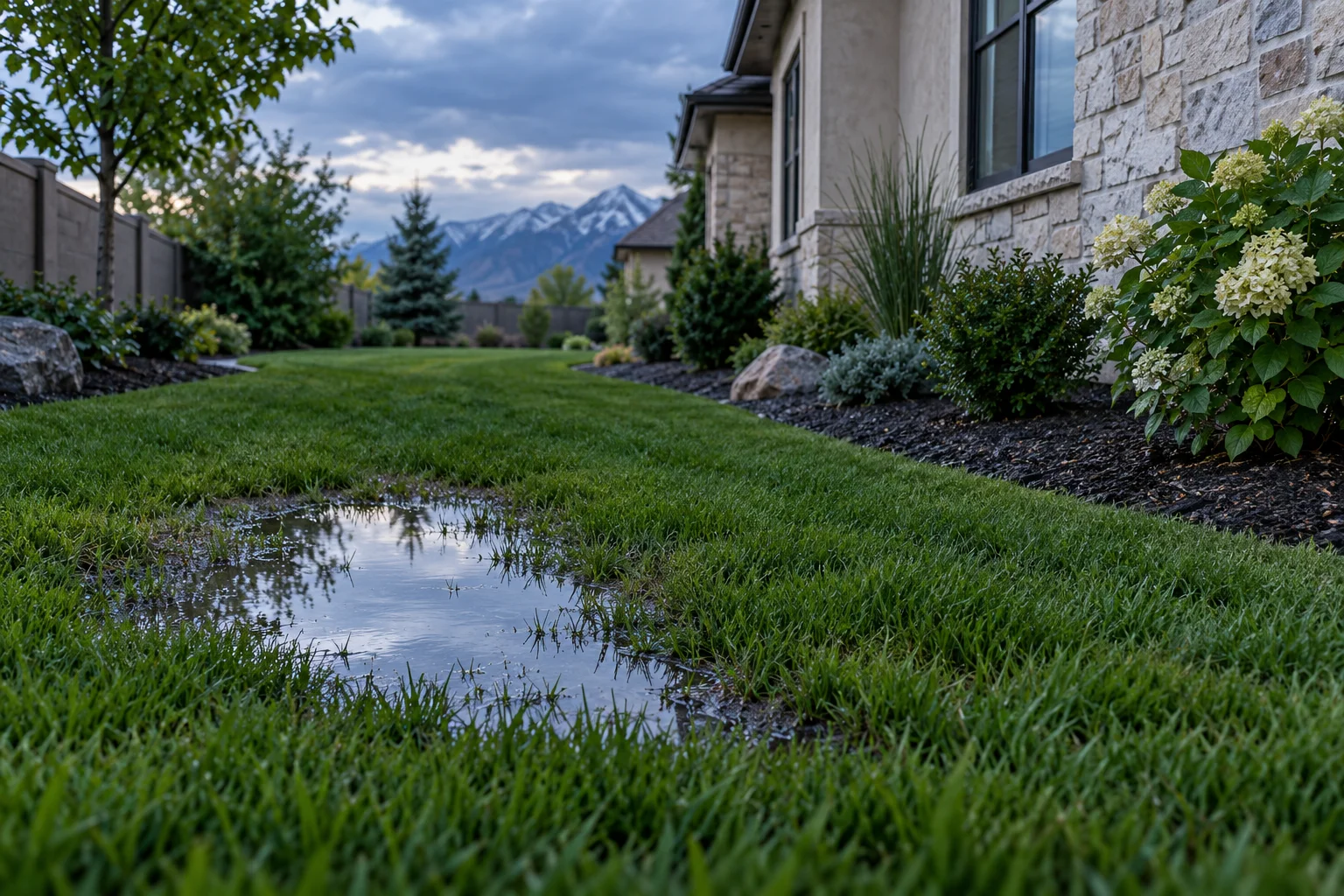
Ask how water leaves the collection area. A system that temporarily stores water still needs suitable infiltration conditions or a discharge route. Groundwater level, soil acceptance, loading and nearby structures influence whether an infiltration approach is appropriate.
A trench placed in slowly draining or already saturated ground should not be assumed to absorb unlimited runoff. A property assessment should explain how the selected system functions during the conditions that caused the original problem.
Compare the complete assemblies.
- Conventional stone and perforated pipe: collection, filtration and conveyance depend on the design.
- Aggregate-only trench: capacity and drainage depend on the aggregate, soil and available route or infiltration.
- Manufactured drainage bundle: installation and product configuration must follow its own current documentation.
- Dry well or other infiltration facility: receiving conditions and regulatory requirements are separate decisions.
What to ask before choosing a system.
Get the proposed materials and any product model in the written estimate. Ask whether there is an internal pipe, how connections are made, where water goes and what maintenance access remains. Do not transfer one manufacturer's dimensions or installation instructions to an unrelated assembly.
Compare excavation, material handling, restoration and future inspection as well as the initial purchase cost. A lighter component or a simpler trench does not automatically produce the right result for the property.
Simplified illustration. Depth, slope, materials and outlet design depend on site conditions.
Every part has a job.
The collection area, filter materials, pipe and outlet should work together with the layout of the site.
Explore related drainage services ↗Common drainage questions.
Can I replace a piped French drain with gravel alone?
Only after evaluating the intended collection and discharge function. An aggregate trench is not automatically equivalent to a piped system.
Are all gravel-free systems pipeless?
No. Check the actual product configuration and component list. Gravel-free describes the drainage medium, not necessarily the absence of pipe.
Will a pipe-free trench work in saturated soil?
Infiltration performance depends on site conditions. Saturation and limited soil acceptance can make a storage-only approach unsuitable.